Navigating open enrollment or purchasing coverage through a state health insurance marketplace can feel overwhelming. When determining how to choose a health insurance plan, consumers must look beyond monthly premium figures to evaluate total annual healthcare costs, provider network access, and prescription drug formularies.
Whether enrolling through an employer benefits portal, Healthcare.gov, or an individual broker, this step-by-step selection roadmap ensures you choose balanced coverage that protects both your physical wellness and household finances.
Table of Contents
Health Insurance Decision Matrix at a Glance
| Factor | Low Expected Medical Use | Moderate Medical Use | High / Ongoing Chronic Care |
| Recommended Metal Tier | Bronze / High-Deductible (HDHP) | Silver Tier (Cost-Sharing Reductions) | Gold or Platinum Tier |
| Monthly Premium Level | Lowest available | Balanced moderate cost | Highest monthly rate |
| Annual Deductible | High ($3,000 to $7,000+) | Moderate ($1,500 to $3,000) | Low ($0 to $1,500) |
| Prescription Coverage | Deductible applies first | Fixed copays for generic/preferred | Lowest tier copays immediately |
| Best-Fit Network Structure | EPO or HMO | HMO or regional PPO | Broad national PPO |
| HSA Account Eligibility | Yes (Triple-tax-advantaged) | Rarely eligible | Ineligible |
Step 1: Calculate Your Total Potential Healthcare Costs
The most common enrollment mistake is selecting a policy solely because it has the lowest monthly premium. True healthcare affordability hinges on your maximum potential spending.
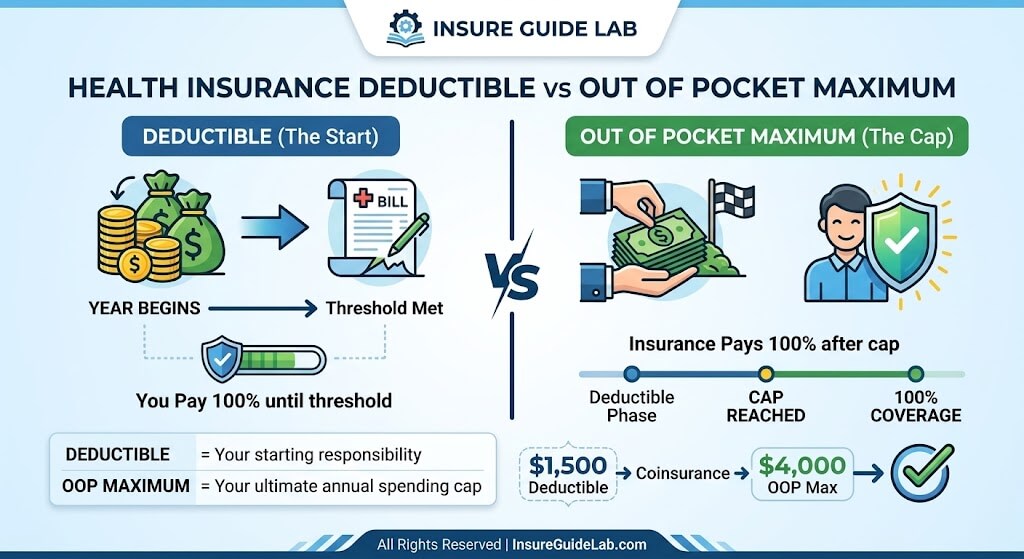
- Premium vs. Deductible Balance: A low-premium Bronze plan saves money each month, but requires you to pay several thousand dollars out-of-pocket before insurance contributes to non-preventive medical bills.
- Understand the Out-of-Pocket Maximum: Your plan’s Out-of-Pocket Maximum represents the absolute legal ceiling you can spend on covered in-network services per calendar year. Once met, the insurer pays 100% of eligible costs.
- Estimate Your Annual Medical Baseline: Tally your routine appointments, recurring specialist visits, therapy sessions, and maintenance prescription refills to project baseline out-of-pocket expenses.
Step 2: Compare Marketplace Metal Tiers (Actuarial Value)
Under Affordable Care Act (ACA) guidelines, plans are categorized into standard metal tiers reflecting average cost-sharing percentages:
- Bronze Plans (60/40 Split): The insurer covers roughly 60% of overall care costs, while you pay 40%. Bronze plans feature the lowest monthly payments, making them suitable for young, healthy individuals seeking catastrophic protection.
- Silver Plans (70/30 Split): Insurers cover 70% of average healthcare costs. If your income qualifies for federal Cost-Sharing Reductions (CSR), Silver plans provide Gold-level deductibles and copays at Silver-tier premium rates.
- Gold Plans (80/20 Split): High premiums paired with low deductibles. Gold plans benefit individuals anticipating scheduled surgeries, frequent specialist treatments, or childbirth.
- Platinum Plans (90/10 Split): Premium-heavy plans with almost zero deductibles, ideal for individuals managing complex chronic conditions requiring ongoing medical procedures.
Step 3: Select the Right Managed Care Network (HMO, PPO, EPO)
Network structure determines which doctors and hospitals you can visit without incurring non-network penalty fees:
- Health Maintenance Organization (HMO): Requires choosing a Primary Care Physician (PCP) who coordinates care and writes referrals for specialists. Zero coverage for non-emergency out-of-network care.
- Preferred Provider Organization (PPO): Allows scheduling appointments directly with any doctor or specialist without a referral. Provides partial reimbursement for out-of-network providers.
- Exclusive Provider Organization (EPO): Functions like an HMO regarding out-of-network care (no out-of-network coverage), but allows you to see in-network specialists without PCP referral slips.
Step 4: Audit Prescription Formularies and Doctor Directories
Never assume your current healthcare providers or prescriptions carry over automatically between insurance policies:
- Check the In-Network Physician Directory: Contact your preferred doctors’ billing offices directly with the exact plan name and metal tier to confirm they participate in the upcoming plan year.
- Review the Drug Formulary Tiers: Insurance formularies group medications into cost tiers (Tier 1: Generics, Tier 2: Preferred Brand, Tier 3: Non-Preferred, Tier 4: Specialty). Verify where your daily prescriptions fall to avoid unexpected pharmacy costs.
Step 5: Evaluate Tax-Advantaged Health Accounts (HSA vs. FSA)
Pairing your insurance coverage with a tax-advantaged account provides substantial tax savings on medical costs:
- Health Savings Account (HSA): Available exclusively with qualifying High-Deductible Health Plans (HDHPs). Contributions are 100% tax-deductible, grow tax-free, and withdraw tax-free for medical expenses. Unspent funds roll over year after year indefinitely.
- Flexible Spending Account (FSA): Offered through employer-sponsored benefit plans. Helps cover copays and vision/dental costs, but is subject to strict “use-it-or-lose-it” annual expiration rules.
4 Costly Mistakes to Avoid When Choosing Coverage
- Ignoring Out-of-Network Penalties: Visiting a non-participating surgical center or hospital on an HMO or EPO can leave you solely responsible for thousands of dollars in medical bills.
- Overlooking Cost-Sharing Reductions: If purchasing through state or federal exchanges, evaluate Silver tier pricing first—subsidies often reduce deductibles from $5,000 down to under $500.
- Failing to Re-Evaluate During Open Enrollment: Carriers adjust provider networks, deductibles, and drug formularies annually. Auto-renewing without reviewing plan changes can result in dropped doctors or higher prescription costs.
- Skipping Preventative Care Screenings: Under the ACA, standard in-network preventative services (annual physicals, mammograms, vaccines, and cholesterol panels) are covered at 100% with zero copay, even on high-deductible plans.
Summary Recommendations
- Calculate Maximum Financial Exposure: Add 12 months of premiums to the plan’s Out-of-Pocket Maximum to determine worst-case medical expenses for the year.
- Prioritize Network Breadth If You Travel: Remote workers and frequent travelers should select PPO networks to ensure continuity of care across state lines.
- Verify Plan Accreditation: Check state exchange compliance records, financial ratings, and consumer complaint ratios through the National Association of Insurance Commissioners (NAIC).
Related Guide: Learn how PPO and HMO provider rules compare in our breakdown of PPO vs HMO.
Related Guide: Understand annual cost-sharing limits in our guide on Deductible vs Out-of-Pocket Maximum.
Disclaimer: This guide is provided for educational and informational purposes only. Health insurance plan structures, ACA metal tiers, and subsidy qualifications vary by state exchange guidelines and carrier agreements. Consult an enrollment navigator or licensed health insurance broker before selecting a policy.