Your ability to earn an income is your most valuable financial asset. If an unexpected injury or serious medical illness prevents you from working, standard health insurance only covers medical bills—it does not replace your lost paycheck. That is where understanding short-term vs long-term disability insurance becomes essential to safeguarding your household financial stability.
Both insurance policies provide income replacement when you are medically unable to work, but they function with vastly different waiting periods, payout durations, and coverage structures.
Table of Contents
Quick Comparison: Short-Term vs. Long-Term Disability
| Feature | Short-Term Disability (STD) | Long-Term Disability (LTD) |
|---|---|---|
| Benefit Duration | 3 to 6 months (up to 1 year max) | 2, 5, 10 years, or until retirement age (65–67) |
| Elimination (Waiting) Period | 0 to 14 days | 90 to 180 days |
| Income Replacement Percentage | 60% to 80% of gross base salary | 50% to 60% of gross base salary |
| Common Causes | Pregnancy/childbirth, minor surgery, short illness | Cancer, chronic illness, severe musculoskeletal injury |
| Monthly Premium Cost | Lower per-month cost | Slightly higher total policy cost |
| Financial Role | Bridges immediate temporary income loss | Protects against permanent career loss |
What Is Short-Term Disability Insurance?
Short-term disability insurance (STD) is designed to replace a significant portion of your weekly paycheck immediately following a temporary illness, injury, or childbirth recovery.
Key Characteristics of Short-Term Disability:
- Short Elimination Period: Benefits typically kick in after a waiting period of 0 to 14 days following the qualifying event.
- Higher Income Replacement: Most policies replace between 60% and 80% of your pre-disability earnings.
- Limited Payout Window: Coverage rarely extends beyond 3 to 6 months, acting as a quick financial bridge until you return to work.
What Is Long-Term Disability Insurance?
Long-term disability insurance (LTD) provides catastrophic income protection for debilitating conditions that keep you out of the workforce for years or permanently.
Key Characteristics of Long-Term Disability:
- Extended Waiting Period: Policies generally require an elimination period of 90 to 180 days before monthly disbursements begin.
- Multi-Year Protection: Once active, payouts can continue for 2 years, 5 years, 10 years, or all the way until you reach Social Security retirement age.
- Strict Definition of Disability: Policies use either “Own-Occupation” (inability to perform your specific job) or “Any-Occupation” (inability to perform any job suitable for your education) definitions.
5 Essential Differences: Short-Term vs Long-Term Disability Insurance
1. Waiting Periods and Payout Triggers
Short-term disability begins almost immediately after you deplete your paid time off (PTO). In contrast, long-term disability requires you to self-fund the first 3 to 6 months through emergency savings or short-term benefits before claims are paid.
2. Length of Coverage
While short-term disability resolves within months, long-term disability shields you from prolonged financial hardship caused by chronic degenerative conditions, strokes, or long-term cancer treatments.
3. “Own-Occupation” vs. “Any-Occupation” Terms
- Own-Occupation: Pays benefits if you cannot perform the duties of your specialized career (common in high-tier long-term disability policies).
- Any-Occupation: Requires that you be unable to work in any reasonable field before qualifying for long-term benefits.
4. Taxability of Payouts
If your employer pays 100% of your disability insurance premiums with pre-tax dollars, the monthly benefit payouts you receive are taxable income. If you pay the premiums yourself with post-tax dollars (individual policy), the benefit payouts are generally 100% tax-free under standard tax rules.
5. Coordination with Other Benefits
Disability benefits often coordinate with state-mandated programs or Social Security Disability Insurance (SSDI) to ensure your total replacement income stays within policy caps.
Decision Checklist: Which Coverage Do You Need?
- [ ] Evaluate Employer Coverage: Check if your workplace provides free or subsidized group short-term and long-term disability.
- [ ] Review Emergency Savings: If you have 6 months of living expenses saved, you may prioritize purchasing individual long-term disability over short-term coverage.
- [ ] Confirm Own-Occupation Language: Ensure medical or specialized professional policies include true own-occupation definitions.
Summary Recommendations
- Prioritize Long-Term Protection: If your budget only allows one policy, long-term disability is far more vital because a multi-year loss of income is financially catastrophic.
- Use Short-Term for Maternity and Quick Recovery: Short-term coverage is particularly valuable for planned family leave and short recuperation periods.
- Supplement Group Plans: Employer group plans are rarely portable when you change jobs; consider securing an individual policy to lock in level premiums.
Related Guide: To explore broader family protection strategies, read our comparison on Term vs Whole Life Insurance.
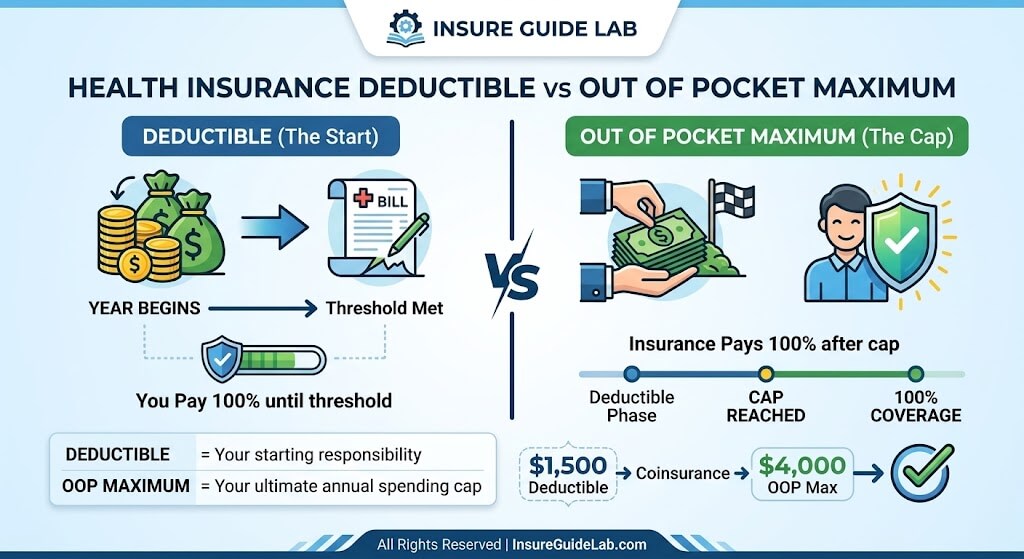
Related Guide: Learn how deductibles and out-of-pocket limits affect your upfront medical costs in our guide on Deductible vs Out of Pocket Maximum.
Disclaimer: This guide is provided for educational and informational purposes only. Disability policy definitions, waiting periods, and income replacement ratios vary by carrier and state regulations. Review your specific policy schedule and consult a licensed insurance professional for advice.