Managing out-of-pocket medical costs requires smart tax-planning strategies. Choosing between an HSA vs FSA (Health Savings Account vs. Flexible Spending Account) is essential to maximizing pre-tax healthcare savings while avoiding common pitfalls like forfeiture rules.
Both accounts allow you to pay for qualified medical expenses using pre-tax dollars, but their eligibility criteria, rollover mechanisms, and long-term investment capabilities differ significantly.
Quick Comparison: HSA vs. FSA
| Feature | Health Savings Account (HSA) | Flexible Spending Account (FSA) |
|---|---|---|
| Plan Requirement | Must be enrolled in a High-Deductible Health Plan (HDHP) | Any health plan (or no specific plan required by employer) |
| Fund Ownership | Individual owns the account (fully portable if you change jobs) | Employer owns the account (funds lost upon leaving job) |
| Rollover Rules | 100% rolls over indefinitely year after year | “Use-it-or-lose-it” rule (limited grace period or small rollover cap) |
| Investment Option | Yes (can invest in stocks, bonds, and mutual funds) | No (cash holding account only) |
| Tax Status | Triple-tax advantaged (tax-free deposit, growth, withdrawal) | Pre-tax contributions and tax-free qualified withdrawals |
| Funds Availability | Funds available only as deposited each pay period | Full annual election available on Day 1 of the plan year |
What Is a Health Savings Account (HSA)?
An HSA is an individually owned, tax-advantaged savings and investment account designed for individuals and families enrolled in qualifying High-Deductible Health Plans (HDHPs).
Key Features of an HSA:
- The Triple-Tax Advantage: Contributions are 100% tax-deductible, investment earnings grow tax-free, and withdrawals for qualified medical expenses are never taxed.
- Complete Portability: Because you own the account, your HSA stays with you when you switch employers, change careers, or enter retirement.
- Indefinite Rollover: Unspent balances roll over year after year without penalty, allowing funds to accumulate into a substantial healthcare nest egg.
What Is a Flexible Spending Account (FSA)?
An FSA is an employer-sponsored arrangement that allows employees to set aside pre-tax dollars for eligible out-of-pocket healthcare expenses during a specific plan year.
Key Features of an FSA:
- Immediate Full Balance Access: Your entire chosen annual contribution is available on the first day of the plan year, even before all payroll deductions have occurred.
- The “Use-It-Or-Lose-It” Principle: Unspent funds generally revert to your employer at the end of the plan year, unless your employer offers a grace period or a statutory limited rollover buffer.
- Tied to Employment: If you leave your job or get laid off, any remaining balance in your healthcare FSA is forfeited.
5 Essential Differences: HSA vs FSA
1. Rollover Rules and Expiration Risks
HSAs never expire; balances accumulate indefinitely and can be invested for decades. FSAs carry a strict annual spending timeline, meaning unspent balances risk forfeiture if not used within the plan deadline.
2. High-Deductible Health Plan (HDHP) Mandate
To open or contribute to an HSA, federal regulations mandate active enrollment in a qualifying HDHP. FSAs do not require an HDHP, making them widely accessible across traditional PPO and HMO health plans.
3. Investment and Wealth-Building Potential
HSA balances exceeding cash minimum thresholds can be invested in mutual funds, ETFs, and index funds, turning the account into a powerful stealth retirement vehicle. FSAs do not offer investment features.
4. Account Portability and Job Changes
When you change employers, your HSA goes with you and remains active. An FSA remains property of the employer, meaning you lose access to leftover funds upon departure.
5. Timing of Fund Availability
An FSA provides your total annual election amount on day one of your coverage cycle. An HSA only allows you to spend funds that have actually been deposited into the account through completed pay periods.
Decision Checklist: Which Account Fits Your Needs?
Choose an HSA If:
- You are enrolled in a qualifying High-Deductible Health Plan (HDHP).
- You want to build a long-term, tax-advantaged healthcare reserve for retirement.
- You prefer an account you personally own regardless of employer changes.
Choose an FSA If:
- Your employer does not offer an HDHP option or you prefer a traditional low-deductible plan.
- You have predictable, scheduled medical expenses (such as orthodontics or planned surgeries) in the upcoming plan year.
- You want access to your full annual contribution pool on Day 1.
Summary Recommendations
- Maximize Employer Matching First: If your employer offers seed contributions or matches for an HSA, prioritize contributing enough to capture the full match.
- Review Eligible Medical Expenses: Both accounts cover thousands of everyday healthcare items, prescription medications, vision exams, and dental procedures.
- Verify State and Federal Guidelines: Account limits and tax rules are updated annually; verify guidelines through the National Association of Insurance Commissioners (NAIC).
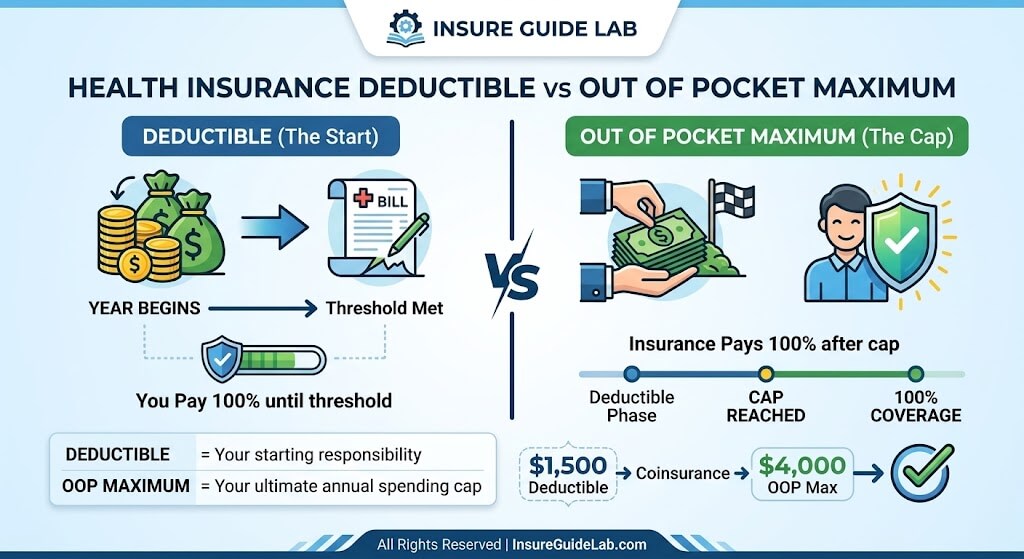
Related Guide: Learn how plan spending limits affect out-of-pocket health costs in our comparison on Deductible vs Out-of-Pocket Maximum.
Related Guide: Protect your income against illness and injury before dipping into medical savings with our guide on Short-Term vs Long-Term Disability Insurance.
Disclaimer: This guide is provided for educational and informational purposes only. Health savings rules, IRS contribution caps, and employer plan structures vary by year and benefits administrator. Consult a certified financial planner or tax advisor for guidance on your specific circumstances.