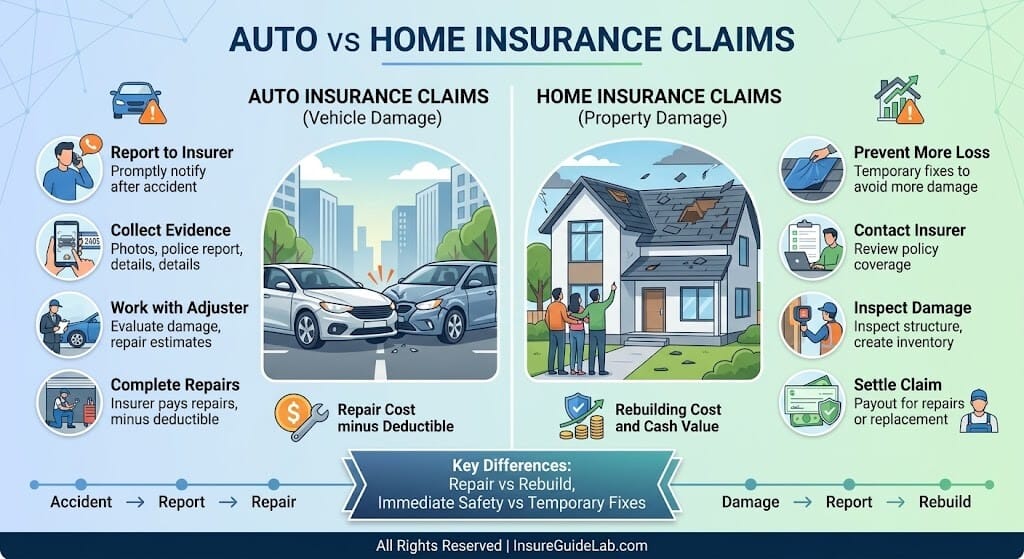
Getting into a car accident or experiencing vehicle damage is stressful. In the aftermath, knowing exactly how to file an auto insurance claim can make the difference between a smooth payout and unnecessary delays or claim denials.
This comprehensive guide breaks down the auto insurance claim process into clear, actionable steps, detailing what documentation you need, critical mistakes to avoid, and how to maximize your settlement.
What Is an Auto Insurance Claim?
An auto insurance claim is a formal request made by a policyholder to their insurance provider seeking compensation or repair coverage for covered damages, theft, or liability arising from an incident involving their motor vehicle.
Depending on the nature of the accident and your policy coverage (Liability, Collision, or Comprehensive), the claim may be handled by your insurer, the other driver’s insurer, or a combination of both.
Step 1: Ensure Immediate Safety and Secure the Scene
Before dealing with paperwork and phone calls, prioritize personal safety:
- Check for Injuries: Check yourself and passengers for any injuries. Call emergency services immediately if medical attention is required.
- Move to Safety: If possible and safe to do so, move your vehicle out of active traffic lanes. Turn on your hazard lights.
- Notify Law Enforcement: Always call the police to the scene, especially if there is significant vehicle damage, injuries, or disputed fault. A formal police report is a cornerstone of evidence for adjusters.
Step 2: Gather Essential Information and Documentation
The strength of your insurance claim depends on the evidence you collect at the scene. Take the following details:
- Other Driver’s Information: Full name, phone number, address, driver’s license number, insurance company name, and policy number.
- Vehicle Details: Make, model, color, and license plate number of all vehicles involved.
- Eyewitness Accounts: Names and contact numbers of any independent witnesses.
- Visual Evidence: High-resolution photos and videos capturing:
- Damage from multiple angles (close-up and wide shots)
- Skid marks, broken glass, or road debris
- Street signs, traffic lights, and overall weather/road conditions
- Police Report Details: Note the responding officer’s name, badge number, and the incident/report number.
Step 3: Contact Your Insurance Provider Promptly
Most insurance policies contain a clause requiring “prompt notification” following an incident. Contact your insurer as soon as you are in a safe location.
Key Questions to Ask Your Claims Representative:
- Is the specific damage covered under my current policy?
- What is my applicable deductible for this claim?
- Does my policy include rental car reimbursement while repairs are underway?
- What is the expected timeline for an insurance adjuster to review the case?
Pro Tip: Stick strictly to objective facts when recounting the event. Avoid using phrases like “It might have been my fault” or guessing speeds and distances. State what happened clearly and let the official investigation determine liability.
Step 4: Work with the Insurance Adjuster
Once your claim is officially opened, an insurance adjuster (claims specialist) will be assigned to your case. The adjuster’s role is to evaluate property damage, review medical records (if applicable), and determine the payout amount.
What to Expect During the Inspection:
- Vehicle Inspection: The adjuster will inspect your car in person or request detailed photographs via a mobile claims application.
- Repair Estimates: You may be asked to obtain repair estimates from approved body shops within the insurer’s Direct Repair Program (DRP) or an independent repair shop of your choice.
Step 5: Review the Settlement Offer and Complete Repairs
After completing the investigation and damage calculation, the insurer will issue a settlement offer:
- Understand Payout Structures:
- If the car is repairable, the insurer will pay the estimated repair cost minus your deductible.
- If the cost of repair exceeds the vehicle’s actual cash value (ACV), the insurer may declare it a Total Loss and pay out the fair market value minus deductible.
- Authorize the Work: Once you and the insurer agree on the estimate, authorize your chosen body shop to proceed with repairs.
- Final Inspection: Inspect your vehicle thoroughly before taking it back from the repair shop to ensure all repairs match the agreed estimate.
4 Common Mistakes to Avoid When Filing a Claim
| Mistake | Why It Hurts Your Claim | How to Avoid It |
|---|---|---|
| Delaying the Report | Violates policy terms and may lead to claim denial. | Notify your insurer within 24–48 hours. |
| Admitting Fault Prematurely | Words spoken at the scene can be used by opposing adjusters. | Exchange information neutrally without assigning blame. |
| Failing to Document Expenses | Unrecorded out-of-pocket costs won’t be reimbursed. | Keep receipts for towing, rentals, and medical visits. |
| Accepting the First Low Offer | Initial offers may not cover hidden structural damages. | Get an independent repair estimate if the settlement seems low. |
Summary Checklist
- [ ] Verified safety and called emergency services/police.
- [ ] Collected other driver’s details, photos, and witness contacts.
- [ ] Obtained the official police report number.
- [ ] Contacted insurance provider to open the claim file.
- [ ] Met with the claims adjuster and obtained repair estimates.
- [ ] Reviewed settlement terms and tracked all related expenses.
Disclaimer: This article is provided for educational and informational purposes only. Auto insurance terms, claim procedures, and legal requirements vary by jurisdiction and policy provider. Always consult directly with your licensed insurance company regarding specific policy questions.