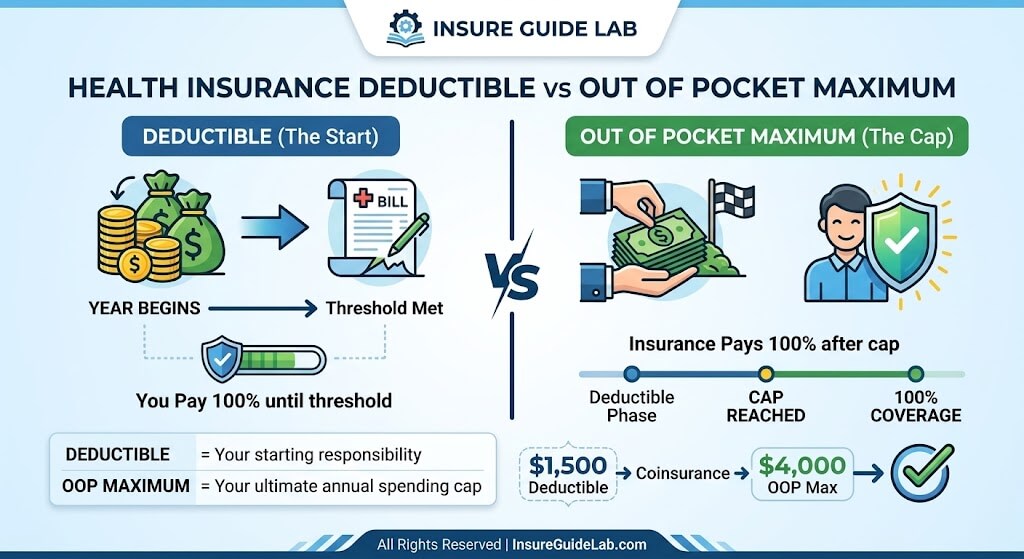
Managing rising out-of-pocket medical expenses requires smart financial planning. Both Health Savings Accounts (HSAs) and Flexible Spending Accounts (FSAs) let you set aside pre-tax money to pay for eligible medical, dental, and vision expenses, saving you anywhere from 20% to 30% depending on your tax bracket.
However, understanding the HSA vs FSA difference and rules is crucial, as their eligibility criteria, rollover guidelines, and ownership structures differ significantly.
Quick Comparison: HSA vs. FSA
| Key Feature | Health Savings Account (HSA) | Flexible Spending Account (FSA) |
|---|---|---|
| Eligibility Requirement | Must be enrolled in a High-Deductible Health Plan (HDHP) | Offered through an employer (any health plan or none) |
| Account Ownership | Owned by you (stays with you if you leave your job) | Owned by your employer (forfeited upon departure) |
| Rollover Rules | 100% rolls over indefinitely year after year | Use-it-or-lose-it (limited grace period or small rollover) |
| Investment Option | Can invest funds in stocks, bonds, and mutual funds | Cannot be invested (cash balance only) |
| Contribution Changes | Change or adjust contributions anytime throughout the year | Changes only during Open Enrollment or qualifying events |
What Is a Health Savings Account (HSA)?
An HSA is an individual, personal savings and investment account designated for medical expenses.
Key Characteristics:
- Triple Tax Advantage:
- Contributions are 100% tax-deductible (pre-tax via payroll).
- Interest and investment growth are completely tax-free.
- Withdrawals for qualified medical expenses are tax-free.
- Permanent Ownership: The money in an HSA is entirely yours. It remains in your account if you switch jobs, retire, or move away.
- Retirement Dual-Use: After age 65, you can withdraw HSA funds for non-medical expenses penalty-free (taxed as regular income, similar to a traditional 401(k) or IRA).
What Is a Flexible Spending Account (FSA)?
An FSA is an employer-sponsored arrangement that allows employees to set aside pre-tax dollars for medical, dental, or dependent care costs during a single plan year.
Key Characteristics:
- Upfront Availability: Your full elected annual contribution is available on day one of the plan year, even before you have completed all payroll deductions.
- “Use-It-or-Lose-It” Rule: Unused funds generally revert back to your employer at the end of the year, subject to employer-specific options:
- Grace Period: An extra 2.5 months to incur new expenses.
- Carryover Limit: An IRS-indexed maximum rollover amount into the next year.
- Tied to Employment: If you leave your job, any remaining FSA funds are forfeited back to the company.
Navigating HSA vs FSA Difference and Rules on Eligible Expenses
Both accounts cover identical IRS-approved medical items under Internal Revenue Code Section 213(d):
- Prescription Medications & Doctor Copays: Urgent care visits, specialist visits, and prescription drugs.
- Dental & Vision Care: Teeth cleanings, fillings, braces, prescription eyeglasses, contacts, and laser eye surgery.
- Over-the-Counter Essentials: Pain relievers, allergy medicines, sunscreen (SPF 15+), first-aid kits, and menstrual care products.
5 Practical Scenarios: Which Account Should You Choose?
Choose an HSA If:
- You have an eligible High-Deductible Health Plan (HDHP).
- You are generally healthy and want to build long-term, tax-sheltered wealth for future healthcare costs.
- You want to invest your healthcare dollars into market funds for compounded growth.
Choose an FSA If:
- You prefer a low-deductible health plan (PPO/HMO) or your employer does not offer an HDHP.
- You have predictable, immediate medical expenses planned for the upcoming year (such as braces, planned childbirth, or scheduled surgery) and can spend the balance before year-end.
Summary Checklist
- [ ] Verified your current health insurance deductible meets HDHP guidelines for HSA eligibility.
- [ ] Calculated expected medical, dental, and vision spending for the next 12 months.
- [ ] Checked employer policies regarding FSA rollover caps and grace periods.
- [ ] Set up automated payroll contributions to maximize tax savings.
Disclaimer: This guide is provided for educational and informational purposes only. Federal tax regulations, HSA contribution caps, and FSA rules update periodically. Consult a certified financial planner (CFP) or tax professional regarding your individual tax situation.
Related Guide: As part of your broader long-term financial safety net, explore our detailed comparison on Term vs Whole Life Insurance: Key Differences & Costs to protect your family’s future.
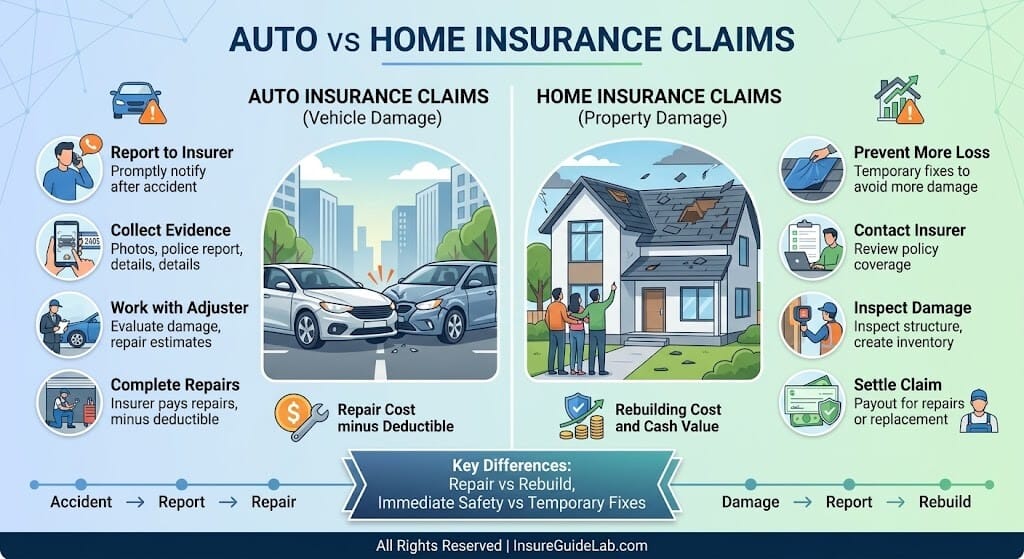
Related Guide: If you recently experienced a vehicle collision or total loss, follow our step-by-step walkthrough on How to File an Auto Insurance Claim to ensure a smooth claims payout.