An unexpected medical condition or sudden injury can stop your household cash flow overnight. When evaluating short-term vs long-term disability insurance, workers must determine how rapidly wage replacement funds activate and how long benefits sustain their living costs.
While both policies provide regular, non-taxable monthly income if you cannot work due to illness or physical impairment, their waiting periods, benefit horizons, and contract definitions operate on completely different schedules.
Quick Comparison: Short-Term vs. Long-Term Disability Insurance
| Feature | Short-Term Disability (STD) | Long-Term Disability (LTD) |
| Elimination (Waiting) Period | Short (0 to 14 days) | Long (90 to 180 days) |
| Benefit Duration | 3 to 6 months (up to 1 year max) | 2, 5, 10 years, or until retirement age (65–67) |
| Income Replacement Rate | 60% to 80% of gross base pay | 50% to 70% of gross base pay |
| Disability Definition | Usually “Own Occupation” standard | Shifts from “Own” to “Any Occupation” after 2 years |
| Common Trigger Events | Childbirth recovery, surgery rehab, fractures | Chronic spine issues, cancer treatments, strokes |
| Average Cost Ratio | Higher relative cost per dollar received | Economical long-term financial safety net |
What Is Short-Term Disability Insurance?
Short-term disability insurance replaces a percentage of your salary during temporary medical absences that resolve within several weeks or months.
- Immediate Income Bridge: Waiting periods typically range from zero days for accidents to seven or fourteen days for illnesses.
- Temporary Payout Window: Benefits typically run for 12, 24, or 52 weeks depending on the policy structure.
- Common Claim Types: Regularly used for pregnancy recovery, post-surgical downtime, minor fractures, and short medical treatments.
What Is Long-Term Disability Insurance?
Long-term disability insurance protects your lifetime earning capacity against chronic or catastrophic health impairments.
- Extended Elimination Period: Requires an initial waiting phase—typically 90 or 180 days—often funded by emergency savings or an expiring short-term plan.
- Multi-Year Financial Shield: Payouts continue for specified periods (e.g., 5 to 10 years) or run continuously until you reach federal retirement age.
- Catastrophic Exposure Defense: Designed for severe ailments such as cancer therapy, neuromuscular conditions, permanent spine damage, or major heart trauma.
5 Essential Differences: Short-Term vs Long-Term Disability Insurance
1. Elimination Period (Waiting Phase)
Short-term disability starts paying almost immediately (within 1 to 2 weeks). Long-term disability requires you to endure a waiting window of 3 to 6 months before payments start.
2. Length of Active Payout Window
Short-term coverage caps benefits within several months. Long-term disability continues paying monthly benefits for decades if you remain medically disabled.
3. Contractual Definition of Disability
Short-term policies qualify you if you cannot perform the duties of your “own occupation.” Long-term policies often require an “own occupation” definition for the first 24 months, after which they transition to an “any occupation” standard.
4. Percentage of Base Income Replaced
Short-term plans replace a higher percentage of gross salary (60% to 80%) because the payout window is strictly limited. Long-term plans commonly cap wage replacement at 50% to 66% to control administrative carrier exposure.
5. Premium Value and Financial Priority
Short-term policies carry higher administrative overhead relative to their payout limits. Financial planners view long-term disability as the far more vital policy because an open-ended illness presents the greatest risk of personal bankruptcy.
Decision Checklist: Selecting Income Defense Plans
Prioritize Short-Term Disability If:
- [ ] You lack a 3- to 6-month liquid emergency savings cushion.
- [ ] You anticipate pregnancy, planned maternity leave, or elective surgery in the near future.
- [ ] Your employer offers free or subsidized group short-term coverage via standard payroll deductions.
Prioritize Long-Term Disability If:
- [ ] Your family depends on your continuous income for living expenses, mortgage payments, and debt obligations.
- [ ] You already possess enough liquid emergency savings to self-insure a 90-day waiting gap.
- [ ] You work in a specialized professional career with high lifetime earnings.
Summary Recommendations
- Stack Both Policies Seamlessly: Align your short-term benefit duration to end exactly when your long-term elimination period finishes (e.g., a 90-day handoff).
- Review Group vs. Individual Taxability: Employer-paid premiums lead to taxable monthly benefits, whereas individual policies paid with post-tax dollars yield 100% tax-free income payouts.
- Verify Underwriting Solvency: Check disability insurance underwriter complaint indexes and financial reserves via the National Association of Insurance Commissioners (NAIC).
Related Guide: Learn how tax-advantaged medical accounts balance unexpected out-of-pocket costs in our guide on HSA vs FSA.
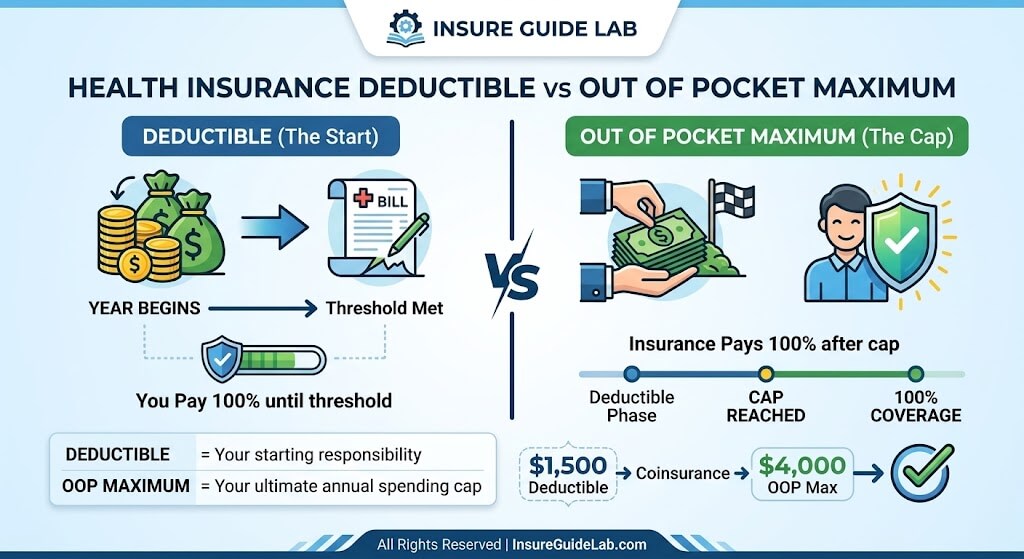
Related Guide: Understand how annual health spending thresholds trigger full coverage in our comparison of Deductible vs Out-of-Pocket Maximum.
Disclaimer: This guide is provided for educational and informational purposes only. Income replacement caps, own-occupation definitions, and elimination periods vary by carrier contract. Consult a licensed benefits specialist or insurance broker for personalized income protection recommendations.