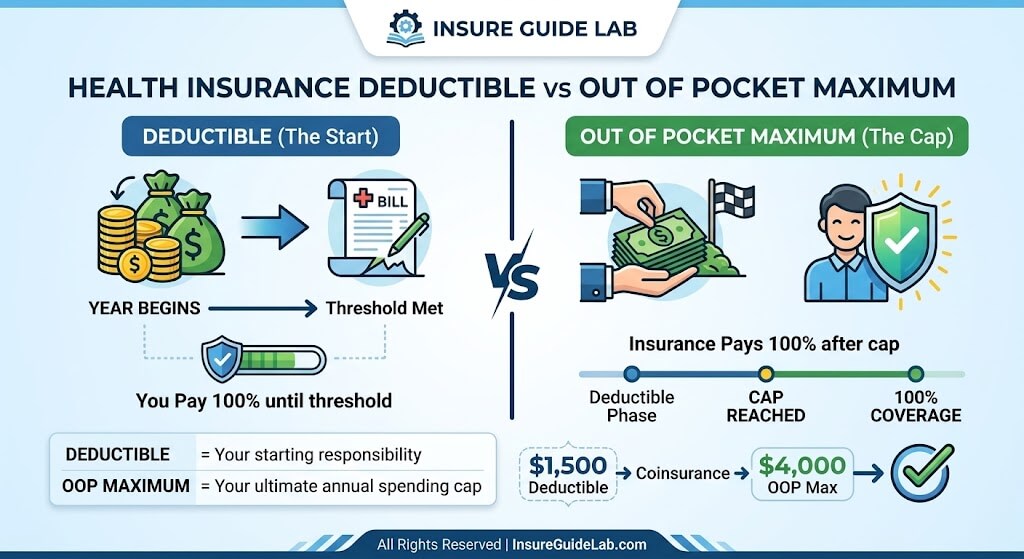
Navigating health insurance terminology can feel overwhelming, but mastering the distinction between a deductible vs out of pocket maximum is the single most important step to preventing surprise medical bills. These two cost-sharing figures determine exactly when your insurance coverage starts paying and the absolute limit on what you will pay during a policy year.
Understanding how these thresholds interact with copayments and coinsurance ensures you choose the right health plan and protect your emergency savings.
Quick Comparison: Deductible vs. Out-of-Pocket Maximum
| Feature | Health Insurance Deductible | Out-of-Pocket Maximum (OOPM) |
|---|---|---|
| Core Function | The initial amount you pay before coinsurance kicks in | The absolute annual cap on your covered medical expenses |
| What Happens When Met? | You start sharing costs (coinsurance/copays) | The insurer pays 100% of covered medical costs |
| Includes Premiums? | No (monthly plan premiums do not count) | No (premiums and non-covered care do not count) |
| Typical Dollar Range | $500 to $5,000+ (depending on plan tier) | $3,000 to $9,450+ (individual standard cap) |
| Financial Stage | Stage 1: Initial out-of-pocket spending phase | Stage 3: Complete financial protection phase |
What Is a Health Insurance Deductible?
A health insurance deductible is the set dollar amount you must pay out-of-pocket for covered healthcare services each year before your insurance provider begins contributing toward your medical claims.
How Deductibles Function:
- Preventive Care Exemption: Most qualified health plans cover routine preventive care (annual checkups, vaccines, mammograms) at 100% before you ever meet your deductible.
- The Payment Phase: If you have a $2,000 deductible and incur a $1,500 minor surgery bill, you are responsible for paying the entire $1,500 out-of-pocket.
- High-Deductible Health Plans (HDHPs): Plans with higher deductibles offer lower monthly premiums and unlock eligibility for a tax-advantaged Health Savings Account (HSA).
What Is an Out-of-Pocket Maximum (OOPM)?
The out-of-pocket maximum is the absolute legal ceiling on the amount of money you are required to spend on covered medical services within a single calendar year.
How the Out-of-Pocket Maximum Protects You:
- Once your combined spending on deductibles, copays, and coinsurance reaches your policy’s out-of-pocket maximum, your health insurer pays 100% of all covered medical bills for the remainder of that plan year.
- It provides catastrophic protection against life-altering medical emergencies, serious surgeries, cancer treatments, or extended hospitalizations.
5 Essential Differences: Deductible vs Out of Pocket Maximum
1. Timing in the Claim Lifecycle
Your deductible represents the starting gate of cost-sharing, whereas the out-of-pocket maximum represents the finish line where your personal medical spending ends completely.
2. Cost-Sharing Progression (The 3 Stages)
- Stage 1 (Deductible Phase): You pay 100% of non-preventive medical bills until reaching your deductible threshold.
- Stage 2 (Coinsurance Phase): You pay a percentage (e.g., 20% coinsurance) while your insurer pays the rest (80%).
- Stage 3 (Maximum Out-of-Pocket Phase): Once total spending hits the out-of-pocket maximum, you pay 0% for covered services.
3. What Counts Toward Each Threshold
Both thresholds count deductibles and coinsurance. However, some plans exclude routine office copays from the deductible while counting them directly toward the out-of-pocket maximum.
4. High-Deductible vs. Low-Deductible Trade-Offs
- Low Deductible / High Premium (Gold/Platinum Plans): Ideal for individuals anticipating ongoing medical treatments, prescription therapies, or upcoming surgeries.
- High Deductible / Low Premium (Bronze/HDHP Plans): Optimal for healthy individuals seeking lower monthly fixed expenses while maintaining a catastrophic safety net.
5. Individual vs. Family Maximums
Family plans carry embedded or aggregate deductibles and out-of-pocket caps. An embedded maximum ensures that no single family member pays more than the individual threshold, even if the family limit has not yet been satisfied.
Decision Checklist: Selecting the Right Health Plan
- [ ] Review Anticipated Medical Care: Do you expect regular specialist visits, costly prescriptions, or major procedures this year?
- [ ] Evaluate Emergency Cash Reserves: Can you cover your full annual out-of-pocket maximum if an emergency occurs tomorrow?
- [ ] Consider HSA Eligibility: High-deductible plans paired with an HSA allow triple-tax-advantaged medical savings.
- [ ] Check In-Network Provider Status: Out-of-network costs generally do not apply toward standard out-of-pocket maximum caps.
Summary Recommendations
- Focus on the Out-of-Pocket Maximum for Safety: When comparing policies, never look at deductibles alone; evaluate the worst-case scenario represented by the out-of-pocket limit.
- Utilize In-Network Facilities: Always verify that hospitals and physicians belong to your plan’s approved network to ensure all expenses count toward your annual maximum.
- Review State and Federal Caps: Federal regulations set statutory limits on maximum out-of-pocket spending for qualified health plans. Check regulatory updates through the National Association of Insurance Commissioners (NAIC).
Related Guide: To optimize your pre-tax medical spending strategies, read our comparison on HSA vs FSA Differences and Rules Guide.
Related Guide: Learn how doctor network rules and referral mandates work in our guide on HMO vs PPO Health Insurance Differences.
Disclaimer: This guide is provided for educational and informational purposes only. Health insurance plan structures, cost-sharing tiers, and statutory maximum limits vary by carrier, plan category, and state regulations. Consult a licensed benefits advisor or insurance agent before enrolling.